Funchal started on a flat strip of shore at the mouth of the João Gomes stream, and that strip is still the liveliest part of town after dark. Locals call it the Zona Velha, the old town. Its spine is Rua de Santa Maria, a cobbled street of painted doors and poncha bars.
We ate and drank in this street several times, and it is the one part of Funchal we’d tell everyone to see by day and again at night.
This page is for you if you are staying in Funchal and want an evening out, or a slow morning walk with the cable car to Monte at the end of it. The main sights fit into a short walk. Dinner usually turns it into a whole evening.
Funchal old town at a glance
- Where: the eastern end of the Funchal seafront, in the parish of Santa Maria Maior, the first parish created on the island.
- Main street: Rua de Santa Maria, about 600 metres of cobbles. It starts at the João Gomes stream on Rua Brigadeiro Oudinot and ends at the Largo do Socorro.
- Painted doors: about 200 of them, part of the Arte de Portas Abertas project.
- Cost: walking the streets and seeing the doors is free, while the Monte cable car is paid (fares further down).
- Best time: late afternoon into the evening, when the terraces fill up. Come back on a morning if you want photos of the doors without crowds.
- Bring: shoes with grip. The cobbles get slippery, and the lanes climb as you head inland.
What to see in the Zona Velha
Rua de Santa Maria
This is one of the original streets of Funchal. Soon after the settlers arrived, a small church called Santa Maria do Calhau went up near the beach, and the street grew around it, running parallel to the shore on easy flat ground.
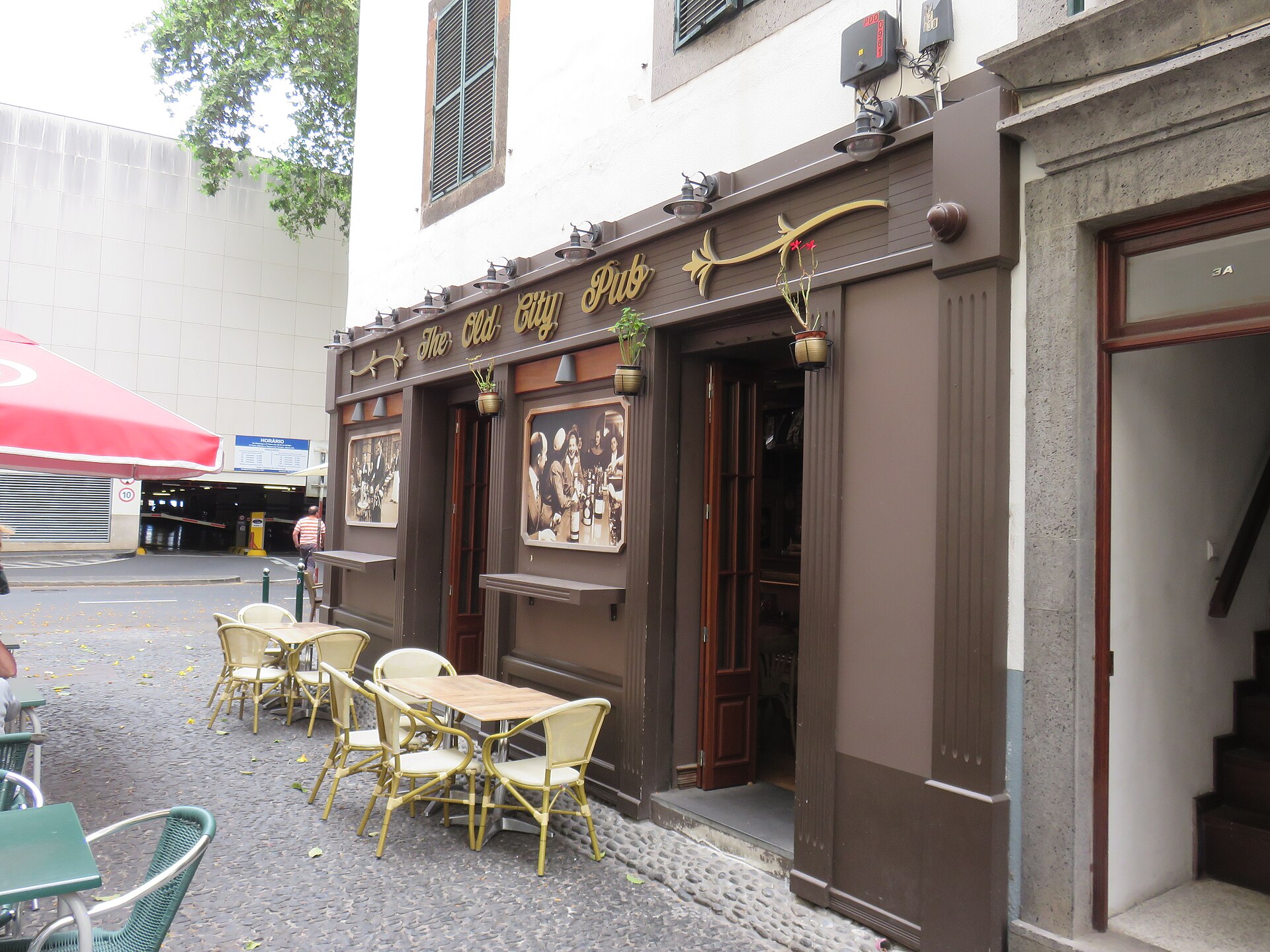
Today shops and terraces line almost its whole length. You’ll find restaurants with traditional Madeiran food and international menus, plus a long run of bars pouring poncha and fruit liqueurs until late. A few fado houses keep the music going too.
On 1 May, the feast of São Tiago Menor, patron saint of Funchal, a procession passes down the street.
The painted doors
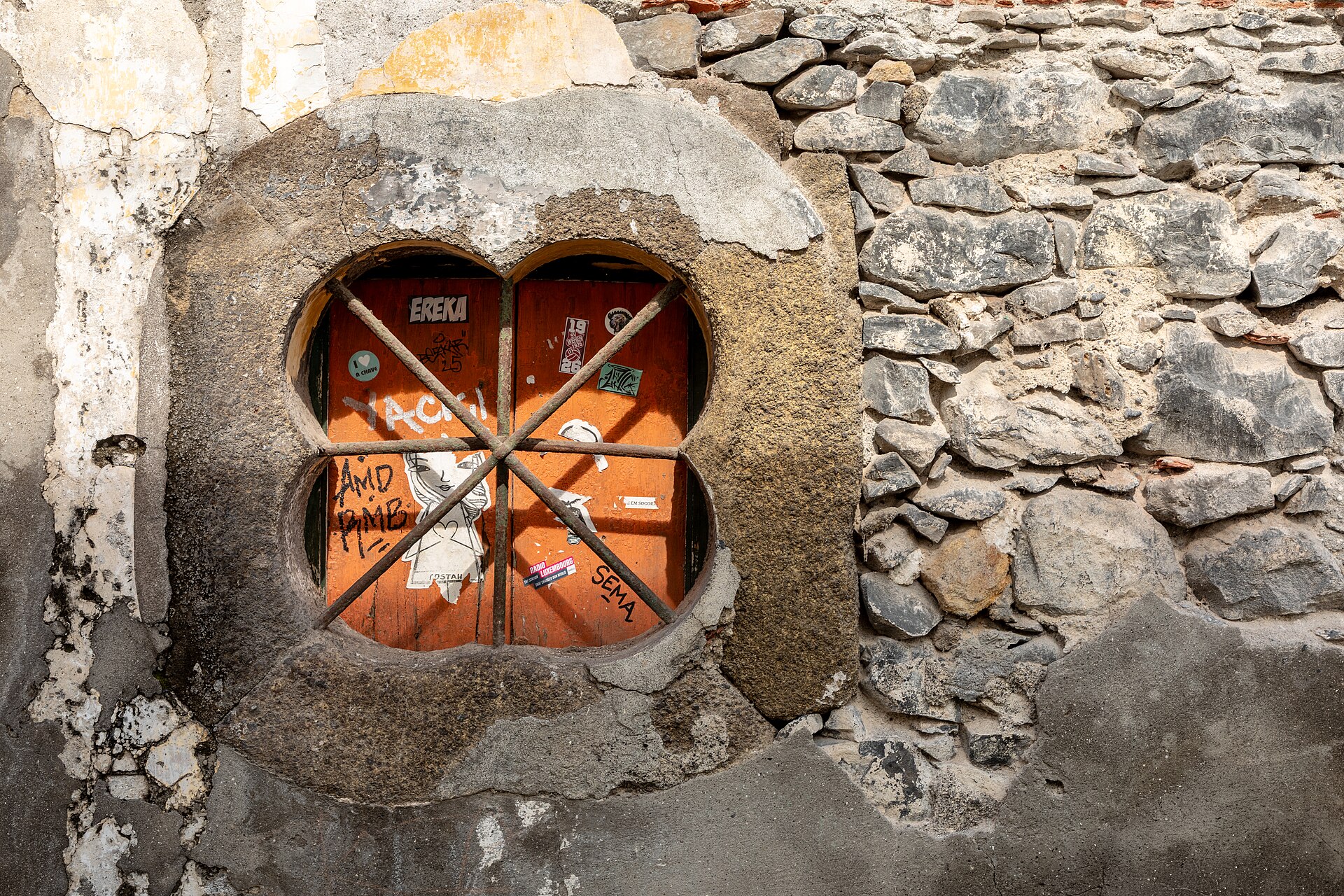
The doors are the reason most people walk this street with their phone in hand. The Arte de Portas Abertas project, the “open doors” art project, gave the doors of abandoned houses and shops to artists and turned the old town into a permanent open-air gallery. The architect Paulo David and the designer Nini Andrade Silva took part.
About 200 doors are painted now.
Our tip is simple. Walk the street once without stopping, then walk it back slowly and look at the doors.
Capela do Corpo Santo
Fishermen from Funchal built this small chapel toward the end of the 15th century, which makes it one of the few buildings that old still standing in the area. It is dedicated to Saint Pedro Gonçalves Telmo, patron of fishermen and sailors.
Only the pointed Gothic doorway is original, and most of what you see inside comes from 16th and 17th century renovations. The best-known piece is a painted panel of the saint blessing a Manueline caravel, possibly one of the oldest images of a ship on Madeira.
Fortaleza de São Tiago
The yellow fort at the eastern end of the old town was started around 1614 to protect Funchal from pirates. Jerónimo Jorge began it. After his death in 1617, his son Bartolomeu João carried on the work. A second building campaign followed in the 18th century under governor José Correia de Sá, and the plaque on the newer gate says 1767.
Over the centuries it housed British troops and military police, and it sheltered families who lost their homes in the 1803 flood. Later it held Funchal’s contemporary art museum. That collection moved to the Casa das Mudas in Calheta in 2015.
At the time of writing (October 2026), the fort is being restructured and is temporarily closed to visitors, though the Forte restaurant inside stays open. Plans include an archaeology museum. Check cultura.madeira.gov.pt before you go.
Igreja do Socorro and the Barreirinha
At the far end of Rua de Santa Maria, on the Largo do Socorro, stands the Igreja do Socorro, also called Santa Maria Maior. Baroque, and right above the sea. It took over the heritage of the older São Tiago church after the 1748 earthquake, and inside you can see a Namban chest from Japan.
Just below, the Barreirinha bathing complex is built against the rock east of the fort. It has a sun deck with direct access to the sea and a bar, and a lifeguard is on duty. There is a lift and ramps for people with reduced mobility. At the time of writing (October 2026), it opens daily 9:30am to 5:30pm.
So yes, you can swim in the old town and then walk a few steps to a terrace.
Eating and drinking in the old town
This is where we’d send anyone on their first night in Funchal. We don’t know a street in Funchal with more places to eat packed so close together, and the lanes around it add more terraces and small bars.
- Compare a few menus before you sit down. The street is long and the choice is wide, so there is no need to take the first table you see.
- Try poncha. The bars here serve the traditional version and fruit flavours. It goes down easily and it is strong, so pace yourself.
- Go early or book. The best terraces fill up fast in the evening, especially at weekends.
Our rule for Madeira is to eat at least once here and at least once in Câmara de Lobos, the fishing village just west of Funchal.
How to get to the old town
On foot is best. The Zona Velha sits at the eastern end of the seafront promenade, a short walk past the Mercado dos Lavradores. Many of the narrow alleys that cross Rua de Santa Maria are open to cars, but the streets are tight and parking is hard, so we’d leave any car at your hotel.
From the Lido or the marina, a taxi is quick. For buses, check routes on horariosdofunchal.pt.
The cable car to Monte
The lower station of the Funchal cable car is on the seafront in the old town, so the Zona Velha is the natural start for a morning in Monte. The line runs 3,200 metres and climbs 560 metres in about 15 minutes.
It reopened in April 2026 after three months of works, with five new glass-floored cabins. At that reopening, a standard ticket cost 16€ one-way and 22€ return, and the glass-floor cabins cost 26€ and 32€. At the time of writing (October 2026), it runs daily 8:45am to 5:45pm and closes on 25 December. Check current fares on madeiracablecar.com.
Up top, you can walk into the Monte Palace garden and ride down in a wicker sledge on the Monte toboggan. We did the toboggan and loved it, so if that’s your plan too, buy a one-way ticket up and let the sledge do the way down.
If you’d rather not deal with tickets, plenty of half-day tours from Funchal include the cable car ride up to Monte.
Where to stay near the old town
Sleeping in the Zona Velha puts every bar and restaurant at your door. It also puts the noise there. The streets stay busy late, so a room right on Rua de Santa Maria is for night owls.
Our advice for Funchal in general is to stay 8 to 10 minutes on foot from the seafront. In the old town, look uphill. You can walk down for dinner and the cable car, then sleep in peace.
Live prices from Booking.com and other sites. Move the map or change the dates to compare.
If you’re still choosing between Funchal and the rest of the island, our guide to where to stay in Madeira compares each area.
Practical tips
- Do it twice. See the doors and the chapel in daylight, then come back to eat.
- Watch the cobbles. They are polished smooth and slippery after rain.
- Check the fort first. It is closed to visitors at the time of writing, apart from the restaurant.
- Bring swimwear. The Barreirinha is right there if the afternoon gets hot.
- Start Monte early. The cable car opens at 8:45am, and the lower station is a few minutes’ walk from the street.
The old town is the easiest win in Funchal. It costs nothing until you sit down to eat. If you want it placed on the right evening of a full week, our free Madeira 7-day plan does that for you. Then book your hotel on the map above and save your first night for Rua de Santa Maria.
FAQ
Is Funchal old town worth visiting?
Yes. Rua de Santa Maria, with its roughly 200 painted doors, is the most characterful street in the city. Add the 15th-century Corpo Santo chapel and the cable car station, and it easily fills an evening or a half day.
Where are the painted doors in Funchal?
They are on Rua de Santa Maria and the lanes around it in the Zona Velha, at the eastern end of the seafront. They come from the Arte de Portas Abertas project, which turned the doors of abandoned buildings into artworks.
Is the old town in Funchal good for nightlife?
Yes. For us it’s the best area for a night out in Funchal, and the bars along Rua de Santa Maria serve poncha until late. For quiet nights, sleep a few streets away.
Can you visit the Fortaleza de São Tiago?
At the time of writing (October 2026), the fort is temporarily closed to visitors while it is being restructured. The restaurant inside is still open. Check cultura.madeira.gov.pt for updates.
Where does the Monte cable car leave from?
The lower station is on the seafront in the Zona Velha. The ride climbs 560 metres to Monte in about 15 minutes and runs daily except 25 December.
Sources
- Zona Velha (Visit Madeira)
- Rua de Santa Maria (Visit Funchal)
- Projeto Arte Portas Abertas (Visit Funchal)
- Corpo Santo Chapel (Visit Madeira)
- Capela do Corpo Santo (Wikipedia)
- São Tiago Fortress (Direção Regional da Cultura)
- Fortress of São Tiago (Visit Madeira)
- Fort of São Tiago (Wikipedia)
- Igreja do Socorro (Visit Madeira)
- Complexo Balnear da Barreirinha (Visit Madeira)
- Teleférico do Funchal (Visit Madeira)
- Teleférico do Funchal reinventa-se e torna-se o único em Portugal com piso de vidro (DNoticias)
This guide contains affiliate links. If you book through them, we may earn a commission at no extra cost to you (disclosure).