Madeira is small on the map, but the roads climb to over a thousand metres and dive through dozens of tunnels. So the real question is how much of the island you want to see.
Stay in Funchal and walk the seafront, and you can skip the car. If the lava pools at Porto Moniz and a sunrise on the peaks are on your list, a rental car changes the trip.
This page tells you if you need one, where to pick it up, and what the insurance, roads and parking rules look like. If mountain driving puts you off, we cover the alternatives too.
Car rental in Madeira at a glance
- Pick-up: eight companies have a desk in the arrivals hall at Cristiano Ronaldo airport, on floor 0 before security. Other companies work from outside the terminal.
- Airport to Funchal: the airport sits 13.2 km east of the city, and the drive takes about 20 to 25 minutes.
- Tolls: none. All expressways and main roads on the island are free.
- Local fee: at the time of writing (October 2026), a usage fee of 2€ per rental day applies, capped at 10 days, and 1€ per day for electric cars. It started on 1 June 2026 and appears on your final invoice.
- Fuel: the regional government sets maximum pump prices. At the time of writing (October 2026), the cap from 19 October was 2.035€ a litre for 95 petrol and 2.085€ for diesel. It changes often, so check the price at the pump.
- Driver age: often 21 or over with a licence held for at least a year. Check your own company’s terms.
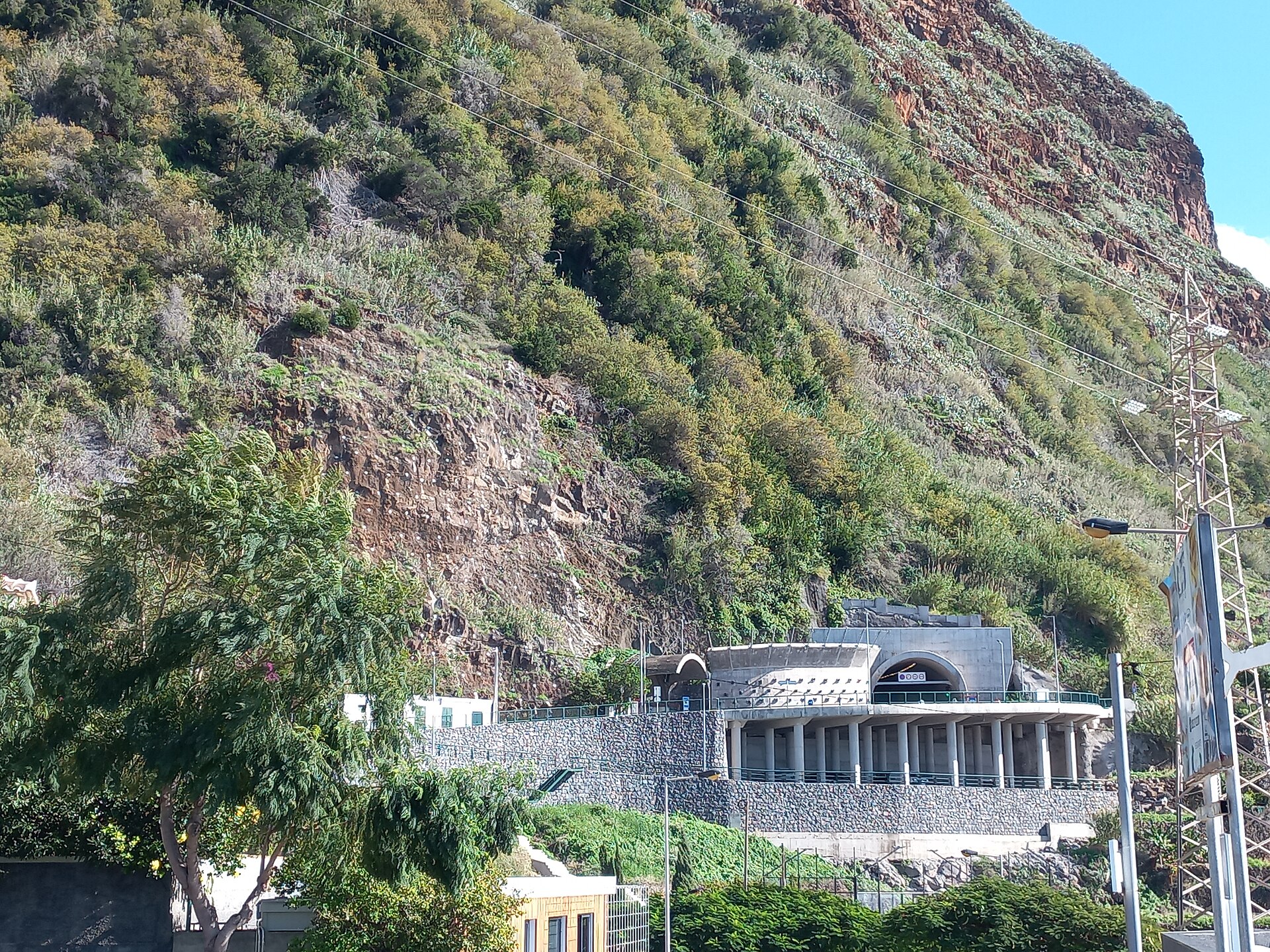
Do you really need a car in Madeira?
Honestly, it depends on your base and your list. Funchal works fine on foot and by yellow city bus, with the cable car for Monte. Monte, the Old Town, the market and the São Martinho pools are all reachable without driving.
The rest of the island is another story. Buses do reach the north and west coasts, but the timetables on those routes are thin, and you plan your day around the last bus back.
Our take is simple.
- No car: a city break in Funchal with one or two organised tours.
- Car for part of the trip: three or four days of hire in the middle of a week, with the city days on foot. You also save on parking and on the daily fee.
- Car for the whole stay: you sleep outside Funchal, in Calheta, Ponta do Sol or on the north coast, or you want early starts for trails.
If you are still choosing a base, our guide on where to stay in Madeira goes area by area.
Picking up your car at the airport
The eight companies with a counter inside the terminal are Avis-Budget, Europcar, Goldcar, Guerin, Hertz, Madeira Rent, Rodavante and SIXT. Cheaper offers often come from companies based outside the terminal.
That is fine, but read the pick-up instructions twice before you land.
We’d compare prices on Discover Cars, a site that lines up the rental companies side by side. Filter by pick-up location and fuel policy first, then by price. A rock-bottom rate with a long shuttle and a strict fuel rule is rarely the bargain it looks like.
Arriving late at night? Pick a company with a desk in the terminal, and check its opening hours against your flight. Our page on getting from the airport to Funchal covers the other options if your flight lands after the desks close.
Insurance and the excess
This is where rental bills grow. A basic quote usually comes with an excess, the amount you pay if the car is damaged. To cover that, the company keeps a hold on a credit card in the main driver’s name.
Even full cover has holes. Sunvil’s 2025 terms for Rodavante cars, for example, leave tyres, wheels, mirrors, lamps, the windscreen and other glass outside the super cover. The underside is only covered if you buy the separate excess insurance.
On Madeira’s narrow lanes, with stone walls and tight bends, mirrors and wheel rims are exactly what takes the hits. Before you sign, check four things:
- the excess and the deposit
- what the full cover leaves out, especially glass, tyres and the underside
- the fuel policy, since some cars leave with a quarter tank and must come back with exactly the same amount
- if your licence needs an International Driving Permit
Then film the car all the way round before you drive off, wheels and windscreen included, and keep the video until your deposit comes back. It takes two minutes.
Roads in Madeira: what driving is really like
The VR1 and the expressways
The VR1 is the backbone of the south coast. It runs 44 km between Ribeira Brava and the port of Caniçal, through 30 tunnels, and links Funchal with the airport.
Expressways, signed VE, branch off toward the north. The usual way to Seixal and Porto Moniz is the fast road via the Encumeada area, then tunnels down to São Vicente.
The VR1 ends at Ribeira Brava for now. The regional government plans to extend it to Ponta do Sol, with building time estimated at two and a half to three years once works start.
Speed limits
Portugal’s general limits are 50 km/h in towns, 90 km/h on other roads, 100 km/h on expressways and 120 km/h on motorways. On Madeira the posted signs matter more, as limits drop in tunnels, near junctions and on bends.
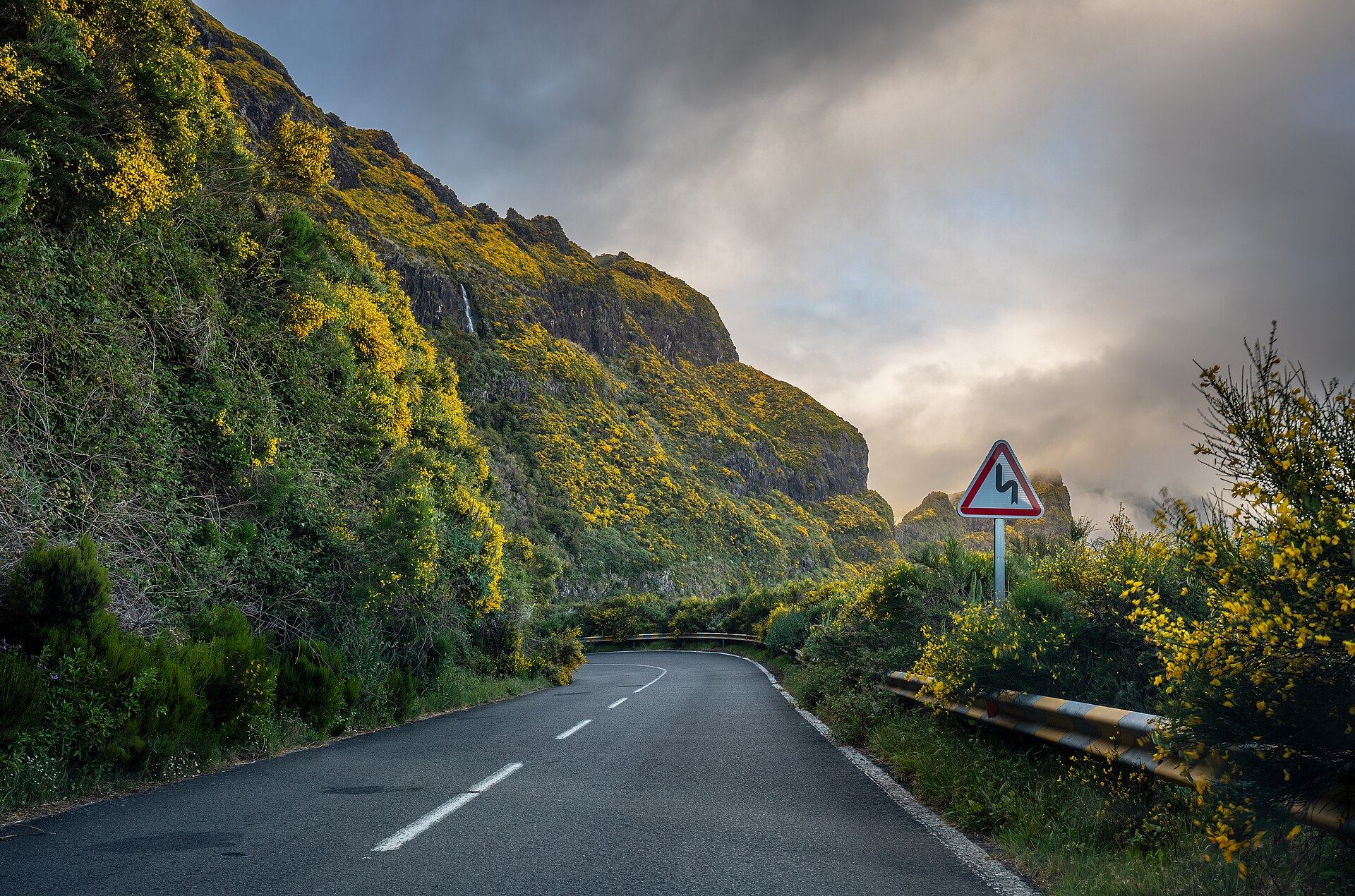
Mountain roads and old coast roads
Main roads and towns are easy enough. The mountain roads are a different job, with tight hairpins and cloud that often sits on the passes.
Your GPS will sometimes suggest a shortcut on a tiny lane. Stick to the bigger road when you have a choice. On the north coast, the old ER101 between São Vicente and Boaventura runs through small tunnels cut into the rock, and it is slow but worth it.
A few habits help:
- Use a low gear on long descents instead of riding the brakes.
- Give way to buses on narrow bends, even when you think you have priority.
- If you don’t drive a manual car at home, book an automatic, and book it early.
Driving in Funchal
Funchal is steep. Some streets above the centre are so sharp that a hill start feels like a test.
We’d park the car at your accommodation for city days and walk. Our general advice for Funchal also helps here: stay about 8 to 10 minutes on foot from the seafront, and choose a place with its own parking if you keep the car for the whole trip.
Parking rules
The colours on the ground tell you what to do. White lines are free, though some spaces are reserved for residents. Blue lines are paid. Yellow lines mean no parking.
Paid spaces generally charge Monday to Friday, 8am to 8pm, and Saturday mornings until 2pm. Sundays and public holidays are free, and you pay at the meter or in the parking app shown on the signs.
Small towns run their own rules. In Porto Moniz, at the time of writing (October 2026), the 144 paid spaces in the village cost 0.80€ an hour, with a maximum stay of 2 hours, on weekdays 9am to 7pm. The meters take coins and give no change, so keep a few in the car, and remember that around 70% of the town’s spaces are free anyway.
Popular trailheads are the tricky part. Pico do Arieiro had serious parking congestion, and in 2024 the regional government decided to keep rental cars out of the summit area near the radar, with a car park about a 10-minute walk below. Rules up there keep changing, so check the IFCN pages before a sunrise drive.
Trails, fees and early starts
A car makes early trail starts easy, but you still need a slot. At the time of writing (November 2026), non-residents over 12 pay 4.50€ on most official PR trails, and the one-way PR1 walk between Pico do Arieiro and Pico Ruivo costs 10.50€. Book through the SIMplifica portal of the regional government before you drive up.
Our Pico do Arieiro to Pico Ruivo guide covers the booking and the closures in detail.
Alternatives to renting a car
Buses
Horários do Funchal runs the yellow city buses. The white SIGA buses link Funchal with the rest of the island. A rechargeable GIRO card costs 0.50€ and makes each trip cheaper, with a city ride at 1.45€ instead of 2€ cash.
The Aerobus links the airport and Funchal about once an hour in the daytime. A single ticket is 6.50€, paid to the driver in cash.
Taxis and ride apps
Taxis wait in Funchal and the main towns, and Uber and Bolt both work on the island. From the airport to Funchal, expect roughly 30€ to 45€ by taxi or Bolt. A full-day taxi tour runs about 180€, and split between three or four people it can beat a rental plus fuel.
Tours
Day tours are the easy answer if mountain roads put you off. A west tour usually covers Porto Moniz and Fanal, and an east tour covers Santana and the peaks. Someone else handles the hairpins.
Where to stay if you rent a car
With a car, you can sleep almost anywhere. Without one, Funchal is the only base that really works.
Drivers often do well with a sunny south-west base like Calheta or Ponta do Sol, or a quiet night on the north coast near Seixal. A garage or private space saves you from hunting blue-line spaces every evening.
Live prices from Booking.com and other sites. Move the map or change the dates to compare.
Our where to stay map compares the main areas side by side.
Our verdict
Rent a car if you want the north and west coasts on your own timetable, and book the cover that includes glass and tyres. Otherwise skip it, or hire for three days.
To time those car days well, follow our Madeira itinerary, or get the free Madeira 7-day plan. Then compare rental offers on Discover Cars once your dates are fixed.
FAQ
Is it hard to drive in Madeira?
The VR1 and the main roads are straightforward. The mountain roads and the steep streets of Funchal take more care, mostly because of the hairpins. If you are a nervous driver, take an automatic and stick to the main roads.
Are there toll roads in Madeira?
No. All expressways and main roads on the island are free for visitors and residents. A rental does carry a regional usage fee of 2€ per day, capped at 10 days, at the time of writing (October 2026).
Can I rent a car at Madeira airport?
Yes. Eight companies have a desk in the arrivals hall on floor 0, before security, and other companies work from outside the terminal. Check opening hours if you land late.
Do I need an International Driving Permit in Madeira?
A full UK or EU licence held for at least a year is usually enough. With a licence from elsewhere, some companies ask for an International Driving Permit or need to confirm your licence first. Ask your rental company before you travel.
Can I get around Madeira without a car?
Yes, if you base yourself in Funchal. City buses and day tours cover the main sights, and SIGA buses reach the rest of the island on thinner timetables. Taxis and ride apps fill the gaps.
Sources
- How to move around (Visit Madeira)
- Fiscalização aperta controlo às rent-a-car no Aeroporto da Madeira (DNoticias)
- New Rental Vehicle Usage Fee in Madeira: what’s changing from June 2026 (Hertz Portugal)
- Gasolina sobe e gasóleo desce na próxima semana (DNoticias)
- 2025 Madeira Car Hire Terms and Conditions (Sunvil)
- Cristiano Ronaldo International Airport (Wikipedia)
- VR1, Madeira (Wikipedia)
- Madeira Extends Via Rápida From Ribeira Brava to Ponta do Sol (Times of Madeira)
- Speed limits in Portugal (Wikipedia)
- Madeira by car: north and south (Portugal Expert)
- Parking (Município do Porto Moniz)
- Pico Do Arieiro Rental Car Ban, Is Reserved Parking An Answer? (Times of Madeira)
- Madeira is increasing entry fees and introducing visitor caps on its hiking trails (Time Out)
- Beyond Rental Cars: Public Transportation in Madeira (Times of Madeira)
This guide contains affiliate links. If you book through them, we may earn a commission at no extra cost to you (disclosure).